
Shredder blades are crucial components in industrial shredding machines, responsible for breaking down materials like plastics, metals, wood, and more. Choosing the right type of shredder blade can significantly impact efficiency, output quality, and overall performance. Among the various options, single-shaft, double-shaft, and quad-shaft shredder blades stand out for their unique designs and applications. Let’s explore the differences and determine which type might suit specific shredding needs.
Single-Shaft vs. Double-Shaft vs. Quad-Shaft Shredder Blades
| Feature | Single-Shaft Shredder Blades | Double-Shaft Shredder Blades | Quad-Shaft Shredder Blades |
| Design | One rotating shaft with sharp blades and a sizing screen. | Two intermeshing shafts rotating in opposite directions. | Four rotating shafts arranged in pairs for multi-directional shredding. |
| Shredding Mechanism | Shears and slices materials. | Tears, compresses, and shears materials. | Multi-directional tearing for fine particle reduction. |
| Applications | Plastics, rubber, and wood; ideal for recycling. | Bulky, tough materials like tires and metal; used in waste management. | Precision shredding, e-waste recycling, and document destruction. |
| Particle Size Control | High precision due to the sizing screen. | Less uniform compared to single-shaft systems. | Excellent control, producing consistent particles. |
| Throughput Efficiency | Moderate, suitable for lighter workloads. | High, processes bulky and heavy materials efficiently. | Very high, capable of handling large volumes and complex materials. |
| Energy Consumption | Lower compared to multi-shaft systems. | Higher due to dual-shaft operation. | Highest among the three due to complexity. |
| Durability | Moderate, best for softer materials. | High, designed for tough and heavy-duty tasks. | Very high, suitable for challenging materials and conditions. |
| Maintenance | Simple and cost-effective. | Moderate, requires regular blade inspection. | Complex, needs skilled maintenance and higher costs. |
| Cost | Affordable initial investment. | Moderate to high depending on size and capacity. | High initial and operational costs. |
1. Single-Shaft Shredder Blades
Single-shaft shredders feature a rotating shaft equipped with sharp blades or cutters. The material is fed into the shredder, where it is reduced in size through the shearing and slicing action of the blades. A screen beneath the blades ensures the shredded material meets the desired size requirements.

Applications
- Ideal for processing softer materials like plastic, rubber, and wood.
- Commonly used in recycling and material preparation applications.
Advantages
- Precise and uniform particle size due to the inclusion of a sizing screen.
- Simple maintenance and operation.
- Lower energy consumption compared to multi-shaft systems.
Disadvantages
- Limited efficiency when dealing with hard, bulky, or heavy-duty materials.
- Slower throughput compared to multi-shaft systems.
2. Double-Shaft Shredder Blades
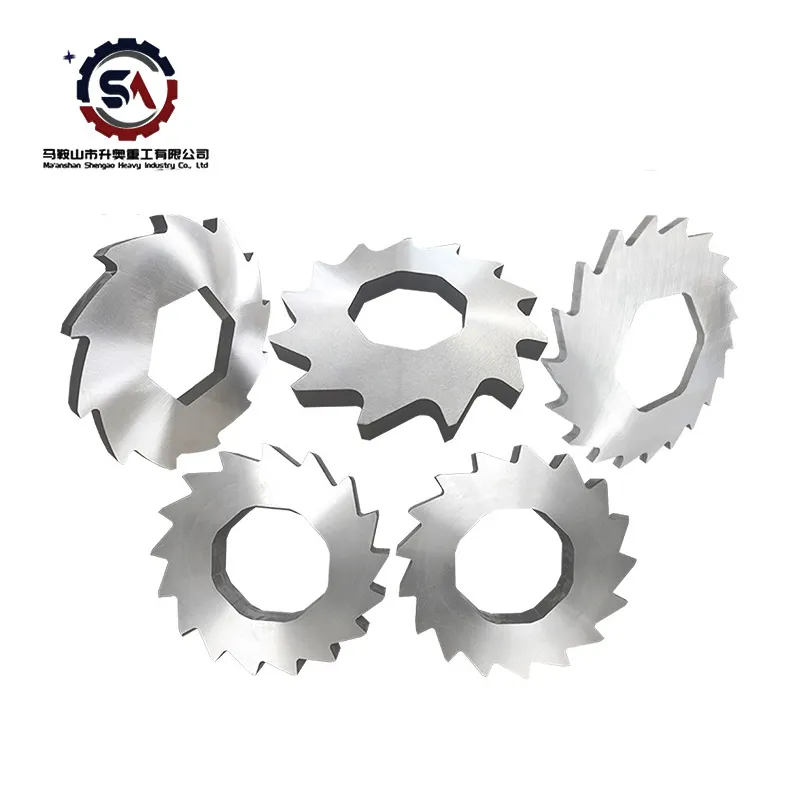
Double-shaft shredders utilize two intermeshing shafts, each equipped with multiple blades. These shafts rotate in opposite directions, pulling materials in and tearing them apart through a combination of shear, compression, and tearing forces.
Applications
- Best suited for handling bulky or tough materials like metal, tires, and industrial waste.
- Widely used in waste management, automotive recycling, and heavy-duty shredding tasks.
Advantages
- High durability and capability to process tough and bulky materials.
- No need for pre-cutting, as the dual shafts efficiently grab and shred large items.
- Robust performance even under challenging conditions.
Disadvantages
- Produces less uniform particle sizes compared to single-shaft systems.
- Higher energy consumption and maintenance requirements.
3. Quad-Shaft Shredder Blades
Quad-shaft shredders incorporate four rotating shafts arranged in pairs. This design allows for a more complex shredding process, effectively breaking down materials into finer and more consistent particles.
Applications
- Ideal for applications requiring precise particle size, such as electronic waste (e-waste) recycling and confidential document destruction.
- Used in industries requiring high throughput with minimal downtime.
Advantages
- Excellent control over particle size, making it suitable for specialized applications.
- High throughput and efficiency in shredding complex materials.
- Reliable operation with minimal jamming due to the multi-directional shredding process.
Disadvantages
- Higher cost of acquisition and maintenance.
- Increased complexity, requiring skilled operators.
How to Choose the Right Shredder Blade?
When selecting the right shredder blade type, consider the following factors:
- Material Type: For softer materials, single-shaft shredders may suffice. Tougher, bulkier materials often require double-shaft systems, while highly specialized applications benefit from quad-shaft designs.
- Desired Particle Size: Single-shaft and quad-shaft shredders offer better control over particle size, making them suitable for recycling and precision applications.
- Throughput Requirements: If you need high efficiency and capacity, double- and quad-shaft systems are more appropriate.
- Budget: Single-shaft systems are generally more affordable but may not handle heavy-duty tasks efficiently.
Single shaft, dual shaft and quad shaft shredder blades each have their own advantages and limitations and are suitable for specific applications. If you need to purchase high quality shredder blades, you are welcome to browse our website to select shredder blades for various applications.